
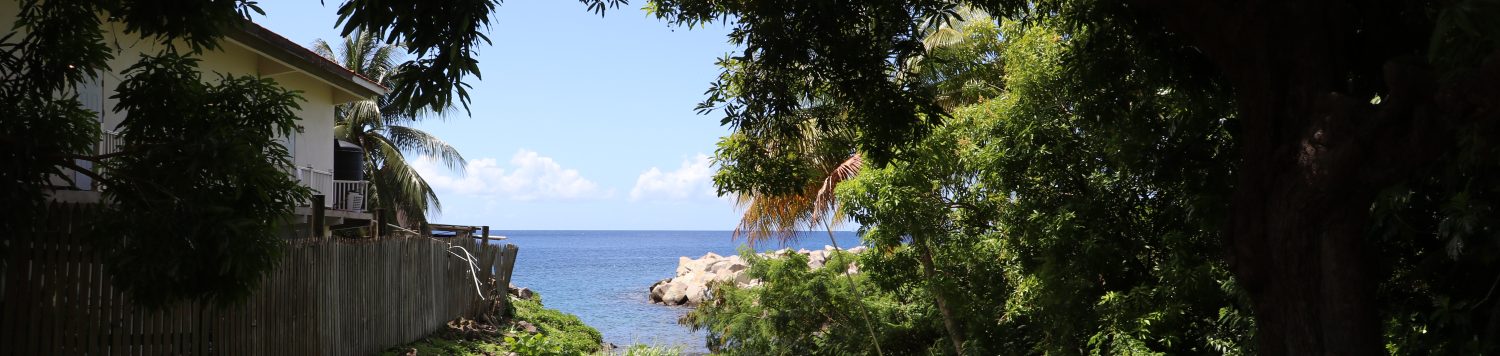

I grew up in Challengers Village; as an 80s baby with memories that really began in the 90s. Back then, Challengers wasn’t exactly the place you’d describe as “happening.” In fact, calling it boring might be generous.

Today, Google claims the population is around 704 people. Now, I don’t know if that’s accurate or just one of those numbers the internet politely makes up, but it feels like a stretch. Unless, of course, we’re counting Stone Fort Heights because those newer, fancier homes might have tipped the scale. Back then, Challengers felt much smaller, but only in size not spirit.


To me, it was a sleepy, slightly dreary village where excitement was rare, and imagination had to do most of the heavy lifting. Challengers Village was and still is the kind of place with aging houses that leaned just enough to tell a story, and neighbors who treated gossip like a full-time occupation. News didn’t travel fast but it traveled thoroughly. Whispered just loud enough for the mosquitoes to pick it up and pass it along.

Every now and then, something would happen; a goat would eat someone’s vegetables in their garden, or some cattle would go missing, a family dispute might briefly shake the dust off the roads, or children doing what children do best: causing mild chaos. But even those moments felt like small ripples in an otherwise still pond.

There were no stoplights. No real entertainment. Just the basketball court and a place we called the “Pasture” an open field that doubled as a cricket pitch, a football field, and, most reliably, a grazing ground for goats and cattle who seemed to own it more than we did.

The adult social scene, if you could call it that, revolved around a few trusted watering holes: Isilma’s, Clem’s, Clivia’s, and Janet’s shop. The Superette down the road held its own kind of importance, but the real legend of adult social circles were those groups of old childhood friends who you would sometimes see gathered together after a long day of work chitchatting or taking long walks up the “Line.”

Challengers might not have been a very popular village but there were a few things and people it was known for such as Mr. Depusoir, who sold what I still believe was the best mauby on the island. No argument. Of course there were more shops, but I honestly can’t remember all of them.
We had a couple of mechanic shops, one welding shop, and at one point, a bread baker whose presence alone felt like progress. There was the Pentecostal Sunday School and the still standing Challengers Methodist Church, which gave the village its rhythm more than anything else. Every Sunday at 7 a.m. or noon Sunday school service welcomed everyone and during the week was bible study.
Then there was “Bay” our rocky stretch of ocean that called to us on the hottest days. There was no soft sand, no postcard-perfect shoreline, just rocks, worn smooth by years of salt, waves, and time itself. To anyone else, it probably didn’t look like much. But to us, it was everything.

That was our swimming spot.
Unpolished. Unimpressive. Unapologetically ours.
We didn’t need pretty we needed water, freedom, and somewhere to disappear for a few hours. And Bay gave us that. We would dive in without hesitation, climbing over those sun-warmed rocks like it was second nature. We’d pick Wilks from the crevices, snack on bay grapes when they were in season, or try our luck at fishing half the time not catching anything but staying anyway. Then swim to “Rock” to sit on it then dive off.

Because that’s what you did when we went “down a Bay.”
You stayed.
And that was it.
By most standards, it was dry. Uneventful. Easy to overlook. But it was mine.
Challengers Village History

Imagine growing up somewhere your whole life and not really knowing its story.
I didn’t learn much about the history of Challengers until I left. And the first thing that truly stayed with me was this: the village was one of the first free villages after slavery.
What I understand now is that Challengers was formed when John Challenger began dividing and selling off portions of his estate. Those pieces of land became home to newly freed men and women who were, for the first time, building lives outside of plantation control.
It became known as a “free village,” a place where former slaves could live independently, on land that was finally, in some way, their own.
And somehow, growing up there, I never knew that.
So, the same village that felt quiet and uneventful to me as a child was born out of resistance, struggle, and a quiet kind of freedom.
Massacre of the Kalinago at Bloody Point River
The Kalinago were the indigenous people of the island long before Europeans ever set foot on it.
If there’s one piece of history about Challengers that stayed with me, it’s this: a battle happened at Bloody Point River. Not just any battle but one that changed everything.

The Kalinago who lived in the area now known as Challengers began to grow concerned as more Europeans arrived. And the Europeans, in turn, viewed the Kalinago as hostile, and as obstacles to their plans. Their goal was clear: turn the island into a profit center for Great Britain through tobacco and sugar plantations, built on the labor of enslaved indigenous people. When that didn’t work, the plan was set to get rid of them or force them into servitude.

Conflict became inevitable.
According to what I’ve learned, a woman said to be indigenous but not Kalinago warned the Europeans of a planned attack. Whether that was true or not, it gave them justification to strike first.
And they did.
In a coordinated effort between the French and the English, they attacked the Kalinago, killing thousands many of them men in what became a devastating massacre. It’s said that over 2,000 Kalinago people were killed.

The area in Challengers where this took place is near a river now kanown as Bloody Point. The story goes that the bodies of the Kalinago were thrown into the river, turning the water red for weeks.
It’s a haunting history.
And one that’s hard to reconcile with the quiet, almost uneventful village I remember growing up in.
We played, laughed, and grew up on land that once held this kind of violence, and we knew it but never really stopped to think too much about it.
One memory of that river has never left me.
It was around 1996 or 1997 I was in my early years of high school. A hurricane had just passed, and the river had overflowed, spilling out onto the road instead of staying within its usual channel that carried it down to the ocean.
I had a homeroom teacher back then, Mr. Heiliger. He also taught us math. To be honest, I didn’t like him much. He was strict very strict and quick to discipline us when we failed. When I asay discipline, he was a man who preferred corporal punishment.
A day or two after the hurricane, he and his fiancée tried to cross that flooded road.
I remember his car; a red one, low to the ground. People had been crossing all day, but locals stood nearby warning drivers, especially those in smaller cars, to turn back. The water was moving fast, stronger than it looked.
But he went anyway.
As he attempted to cross, the current caught the car and pulled it off the road, dragging it over the man-made waterway that fed into the river and out toward the ocean.
The car, and both of them, were swept away.
They were never seen again.
What Will Become of Challengers Village
Returning to my village brought back a poem I’ve never quite been able to remember in full. The one that says, “The house is old, not strange. Nothing suffered change. Stray here a mile and there a mile beyond where brushes end…”

I can never find that full poem, but the feeling of it is still true.
Time has done what it always does. Nature and modernization have worn things down. The part of the village where I live is nearly empty now. Families have moved away, and in some cases, the last elder has passed on, leaving homes and land to decay, to be fought over or for the monkeys to claim.
It’s a quiet kind of sadness. The people I once knew are gone, but their houses remain, slowly falling apart.
For now, Challengers Village still stands. Some of the original foundations remain from the first homes built during the time of John Challenger. But even in its survival, there’s a quiet grief in seeing so many houses abandoned, left behind to time. I am now left to wonder what will become of this place, how will challengers develop?
